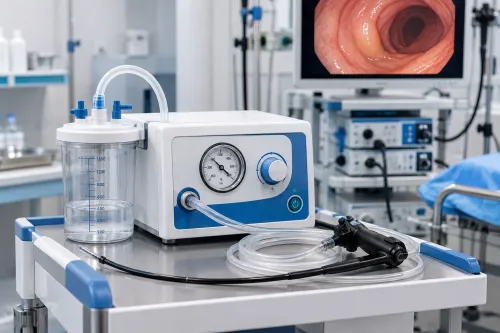
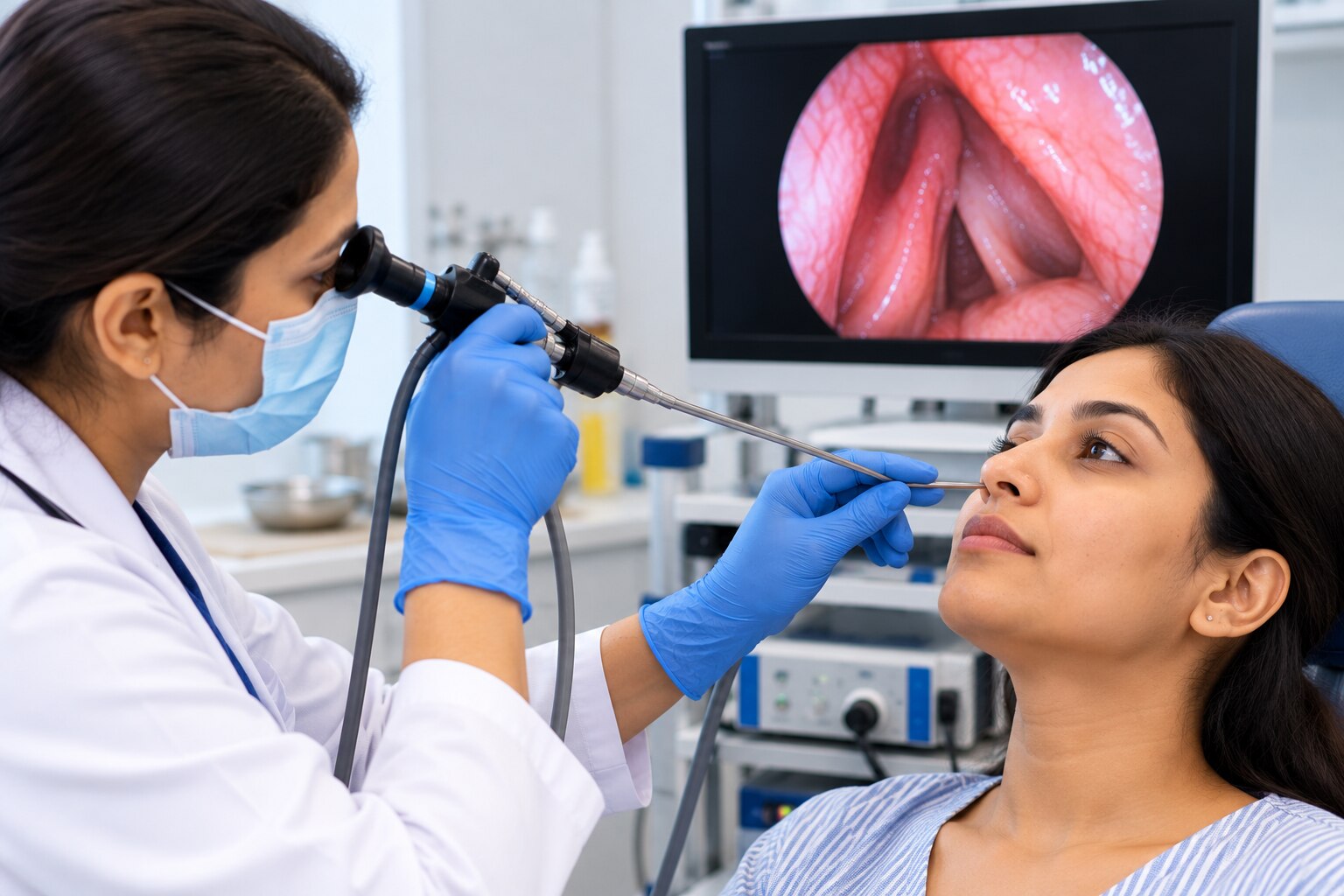
People booking a nasal endoscopy in Bangalore often want to know whether they need to fast, what the scope will feel like, and when they will receive an answer. By following the appointment from preparation through examination and follow-up, you can arrive ready and understand which findings are immediate and which require further testing.
Key takeaways
- Eat and drink normally unless sedation or another planned procedure changes your instructions.
- Expect numbing and decongestant sprays before the nasal scope examination.
- The clinician can discuss visible findings immediately after the examination.
- Biopsy results and some causes of symptoms require additional tests or follow-up.
Before You Leave for Your Nasal Endoscopy Appointment
Standard nasal endoscopy preparation in Bangalore usually means no fasting and no routine medication changes for a standard office examination. Eat and drink normally unless the clinic gives different instructions. Sedation, a biopsy, or another planned procedure changes those instructions, so confirm them before leaving home.
Before your nasal endoscopy appointment in Bangalore, complete these checks:
- Tell the clinic about pregnancy, medication allergies, nasal sprays, blood thinners, previous nasal surgery, and relevant medical conditions.
- Bring CT scans, MRI reports, previous endoscopy reports, current prescriptions, and an up-to-date medicine list.
- Confirm registration, identification, referral, and fee requirements because Bangalore clinics set their own rules.
The scope examination is usually brief, but check-in, nasal sprays, discussion, and possible irritation add time. Leave extra time around the visit rather than scheduling a tight appointment immediately afterward.
Most people can return to work or school after an uncomplicated examination. Arrange time away if sneezing, discomfort, temporary numbness, or a possible biopsy could affect the rest of your day. Ask the clinic whether tissue sampling or another procedure is planned, because it can change both preparation and your post-visit activities.
Arrival, Consent, and the Sprays Before the Scope
A nasal endoscopy procedure in Bangalore usually begins with a short clinical review, not scope insertion. Registration requirements vary, but the clinician confirms the referral reason, current symptoms, medicines, allergies, previous nasal operations, and any CT scans, MRI reports, or earlier endoscopy reports.
1. You remain awake and sit upright. The clinician explains the examination, answers your questions, and discusses possible additions such as suctioning mucus, crusting, or blood, or taking a small biopsy from an unclear area. A biopsy is not part of every routine examination. You give consent before proceeding.
2. Tell the clinician about pregnancy, previous reactions to anaesthetic medicines, and relevant allergies before either spray is used. A topical decongestant can shrink swollen tissue and create a clearer passage; a local anaesthetic spray can reduce contact discomfort when needed.
3. The sprays can leave a bitter taste, dry the nose or throat, numb the throat temporarily, or cause a faster heartbeat. The decongestant can also create a short-lived feeling that the nose is more blocked. These effects usually fade as the medicine wears off, but report anything concerning before the scope is inserted.
This preparation is the same basic sequence described for a nasal scope examination in Bangalore: assessment, questions, consent, and topical treatment when appropriate. The clinician then checks that you are comfortable before beginning.
How the Nasal Scope Examination Feels and What It Shows
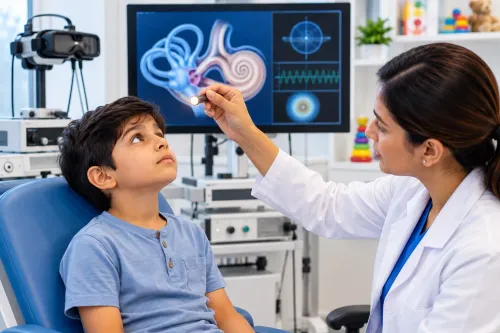
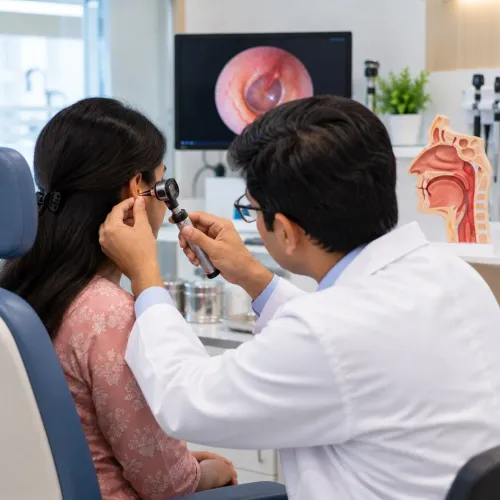
A routine nasal scope examination in Bangalore usually takes 5 to 10 minutes. You remain awake, seated upright, and looking straight ahead while the clinician examines one nostril at a time.
1. The clinician applies lubricant to a flexible or rigid scope and gently guides it through one nostril. The scope is not inserted into the brain or lungs, and it advances only as far as needed.
2. A flexible scope bends around the nasal passage, making it useful for deeper or awkward areas. A rigid scope gives a bright, straight, detailed view and is chosen when that angle suits the examination.
3. The scope shows the nasal septum, turbinates, nasal valve region, sinus drainage pathways and openings, and the back of the nose. The clinician also looks for polyps, crusting, pus, bleeding points, swelling, and masses.
4. The clinician can pause, reposition, or withdraw the scope at any point. Suction through the scope can clear mucus, crusting, or blood, while a biopsy requires a separate decision when tissue needs testing.
Expect pressure, watery eyes, sneezing, brief discomfort, or gagging as the scope reaches the back of the nose. Sharp pain is uncommon. Tell the clinician immediately about significant pain, dizziness, or the need to stop; the examination can be paused or ended.
What You Learn Immediately—and What Needs Another Test
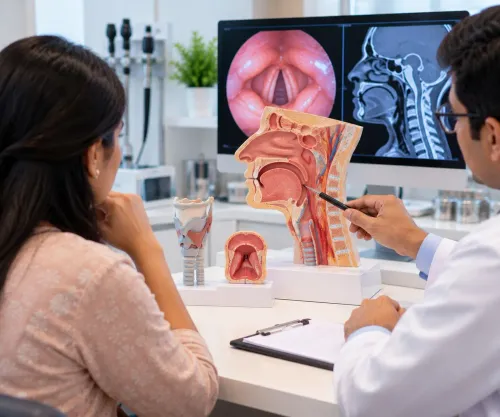
After the scope is removed, the clinician can often explain visible inflammation, polyps, a deviated septum, enlarged turbinates, bleeding sites, pus, crusting, or a mass immediately. Endoscopy also shows how the nasal lining and openings look during examination, including movement and drainage.
| Test | What it shows | Main limitation |
|---|---|---|
| Anterior rhinoscopy | A limited view of the front of the nose | Cannot inspect farther passages and sinus openings directly |
| Nasal endoscopy | Nasal lining, septum, turbinates, sinus openings, movement, crusting, and surface abnormalities | Does not provide cross-sectional images of surrounding bone |
| CT of the paranasal sinuses | Cross-sectional detail of sinus spaces and bone | Does not replace every direct endoscopic view |
| MRI | Soft-tissue detail for selected deeper or complicated findings | Not the routine answer for every nasal complaint |
| Nasal swab | Collected material for selected infections | Shows neither anatomy nor movement |
If the clinician takes tissue, the immediate appearance remains a visual impression, not a diagnosis. A laboratory pathologist provides the later pathology result, and timing depends on the laboratory and tests requested.
Before leaving your nasal endoscopy appointment in Bangalore, ask when and how results will be communicated, especially after a biopsy. The basic nasal endoscopy procedure in Bangalore follows the same sequence elsewhere: examination, consent, scope inspection, discussion of visible findings, and later communication of laboratory results.
After the Examination: Recovery, Added Procedures, and Next Steps
After scope removal, you can leave once the clinician has discussed visible findings. Temporary irritation, sneezing, dryness, throat numbness, and a small amount of spotting can follow an uncomplicated examination. Avoid hot food or drinks until throat sensation returns.
Contact the treating clinic for bleeding that is heavy or persistent, severe pain, fever, breathing difficulty, or symptoms that do not settle; seek urgent care for breathing difficulty or uncontrolled bleeding.
| What happens | What it means | When it applies |
|---|---|---|
| Visual examination | The scope is used to inspect the septum, turbinates, sinus openings, swelling, polyps, pus, crusting, or bleeding | Every routine diagnostic visit |
| Suction clearance | Mucus, crusting, or blood is removed through the scope to improve the view or breathing | When material blocks the passage |
| Biopsy | A small tissue sample is taken from an unclear area for laboratory testing | When visual examination cannot identify the area |
| Foreign-body removal | An object is removed through the nose using suitable instruments | When an object is lodged in the nasal passage |
| Endoscopic surgery | Treatment is performed under endoscopic guidance | Only after a separate decision based on symptoms, examination, scans, and response to treatment |
These additions are not part of every visit. For nasal endoscopy procedure steps in Bangalore or nasal endoscopy preparation in Bangalore, ask Dr. Sohini's ENT Care - Empathy meets Expertise what the appointment includes, whether scans are needed, how findings will be explained, and whether a follow-up procedure needs separate preparation.
Related service
OPD Consultation and Procedures Experience comprehensive nasal health assessments with Dr. Sohini Chakrabarti's Diagnostic Nasal Endoscopy services. View service → |
Frequently asked questions
Do you need to fast before nasal endoscopy in Bangalore?
Standard office nasal endoscopy usually does not require fasting. Eat and drink normally unless the clinic has planned sedation, a biopsy, or another procedure and gives different instructions.
What happens when you arrive for a nasal endoscopy appointment?
The clinic confirms your details, explains the examination, obtains consent, and may use decongestant and numbing sprays before inserting the scope.
Does a nasal scope examination hurt?
You may feel pressure, brief stinging from the sprays, or an urge to sneeze. The clinician guides the flexible scope carefully through the nose and pauses if you are uncomfortable.
Will you get nasal endoscopy results immediately?
The clinician can usually explain visible findings immediately. Biopsy results and questions requiring imaging, allergy testing, or other investigations need follow-up.
What should you do after nasal endoscopy?
Follow the clinic’s instructions while the numbing spray wears off. Ask when to resume food and drink, and confirm whether you need another appointment or added procedure.
Keywords