
Speech therapy at an ENT clinic can involve far more than pronunciation practice: assessment may cover hearing, language, voice, fluency, swallowing, and neurological communication changes. By the end, you will know what happens before therapy, what sessions involve, how care differs by age and diagnosis, and which questions to ask before booking.
Key takeaways
- Expect case history, communication testing, and goal setting in the first assessment.
- Complete an ENT or hearing evaluation first when hearing loss affects speech development.
- Sessions vary by age, communication goals, diagnosis, and daily demands.
- Compare providers by assessment methods, clinician coordination, and progress tracking.
What happens during the first speech therapy assessment?
The first speech therapy assessment in bangalore identifies the communication problem before setting exercises or goals. The clinician takes a case history, asks about onset, medical treatment, development, languages used at home, school or work demands, and previous therapy.
For a child, this includes speech and language milestones; for an adult, it includes stroke, brain injury, neurological disease, surgery, or voice change.
The clinician reviews:
- Speech sounds, intelligibility, receptive and expressive language, social communication, fluency, and voice
- Lip, tongue, jaw, palate, breathing, and coordination during an oral-motor examination
- Hearing history, responses to sound, hearing-device use, and existing audiology results
- Communication participation, such as answering in class, speaking at work, eating safely, making phone calls, or joining family conversations
The assessment separates similar-looking problems before goals are chosen:
| Finding | What the clinician checks | Why it changes goals |
|---|---|---|
| Speech-sound difficulty | Sound errors, patterns, and intelligibility | Selects articulation or phonological work |
| Language difficulty | Understanding, vocabulary, grammar, and word retrieval | Targets comprehension or language formulation |
| Fluency or voice change | Repetitions, blocks, rate, loudness, strain, and quality | Directs fluency or voice treatment |
| Motor-speech or hearing concern | Movement, coordination, hearing access, and clarity | May require medical or audiology evaluation first |
These speech therapy inclusions in bangalore help create a functional plan rather than a generic pronunciation drill. A speech therapy assessment in bangalore may end with home observations, referrals, and measurable targets.
When does speech therapy need ENT or hearing evaluation first?
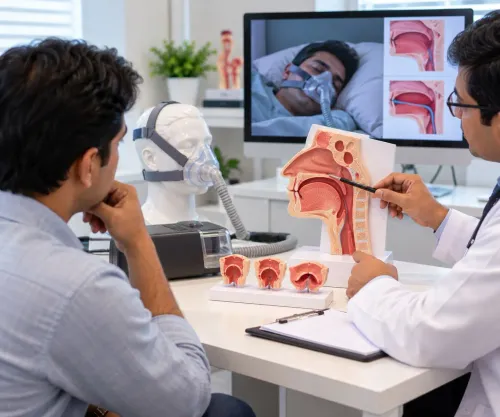
Routine therapy should wait for ENT or hearing evaluation when the symptoms suggest a medical, structural, hearing, or swallowing problem. A speech therapy assessment in Bangalore may therefore be coordinated with medical testing rather than starting with pronunciation exercises.
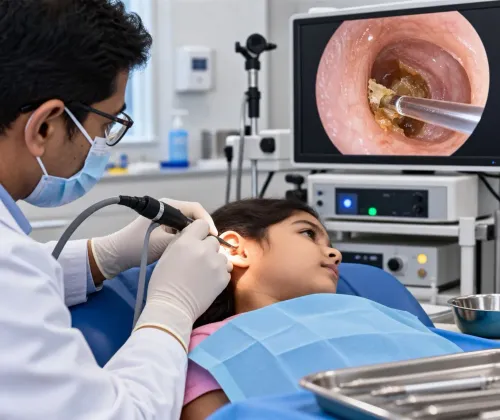
1. Arrange an ENT examination for hoarseness lasting about three weeks, unexplained voice change, vocal strain, reflux-related irritation, suspected vocal-fold lesion, or voice change after head-and-neck surgery. The ENT may perform laryngoscopy to inspect the larynx; ear endoscopy helps assess ear-canal or eardrum problems.
2. Complete a hearing test when a child has unclear speech, delayed language, poor response to sound, frequent ear infections, or inconsistent listening. Add tympanometry when middle-ear fluid, Eustachian-tube dysfunction, or conductive hearing loss is suspected. Treating speech without checking access to sound can waste therapy time.
3. Request a swallowing assessment for coughing or choking with food, wet or gurgly voice after drinking, repeated chest infections, food sticking, prolonged meals, or weight loss. Videofluoroscopic swallow study or FEES may follow when a bedside assessment cannot establish airway safety.
4. Seek urgent medical review for breathing difficulty, coughing blood, a neck lump, severe swallowing difficulty, sudden hearing loss, or rapidly worsening neurological symptoms.
What do speech therapy sessions look like for different ages?
Most sessions follow a practical loop: the clinician checks the current target, demonstrates a task, guides repeated practice, records performance, and sets a short home programme. Speech therapy sessions in Bangalore are not fixed packages; duration and frequency depend on age, diagnosis, medical care, goals, attendance, and response.
- Toddlers work through play, gestures, imitation, early words, turn-taking, and understanding simple language. A parent or caregiver usually joins the session, learns prompts, and practises for a few minutes during daily routines.
- School-age children may practise speech sounds, vocabulary, grammar, fluency, reading-related language, or social communication. Activities can include picture tasks, conversation, games, and classroom-based strategies; caregivers support home practice without correcting every error.
- Teenagers work on intelligibility, stuttering strategies, voice use, conversation, presentation skills, or self-advocacy. They take greater responsibility for targets and track situations that make communication harder.
- Adults may practise word retrieval, clear speech, attention, memory, conversation, voice care, or safe communication after neurological or head-and-neck conditions. Family members learn communication-partner strategies when needed.
Speech therapy inclusions in Bangalore vary by the problem, so the clinician records accuracy, participation, cueing needed, or functional success rather than relying only on impressions. Reviews may occur every few weeks or after a defined goal block; progressive conditions and changing medical needs require periodic reassessment.
Consistent home practice often determines whether clinic gains carry into everyday communication.
What does adult speech rehabilitation cover?
Adult rehabilitation targets the communication problem behind the symptom, not just pronunciation. An adult speech therapy clinic in Bangalore may work with changes caused by stroke, traumatic brain injury, dementia, Parkinson’s disease, other neurological conditions, or treatment affecting the larynx, mouth, jaw, tongue, or throat.
Therapy may address:
- Aphasia: word retrieval, comprehension, reading, writing, conversation, and alternative communication.
- Dysarthria: speech clarity, breath support, rate, loudness, and prosody.
- Apraxia of speech: planning and sequencing speech movements through structured repetition and sound practice.
- Cognitive-communication changes: attention, memory, organisation, problem-solving, topic maintenance, and communication strategies for family members.
- Vocal strain: safer voice use, vocal-load management, resonance, and coordination with ENT care when hoarseness or a vocal-fold problem is present.
- Swallowing-related concerns: screening, safe swallowing techniques, posture, pacing, and recommended food or liquid modifications after a proper swallowing assessment.
- Head-and-neck treatment effects: rebuilding intelligibility, resonance, voice, swallowing, and oral movement after surgery or radiation.
A speech rehabilitation ENT clinic in Bangalore may coordinate therapy with laryngoscopy, hearing evaluation, neurology, oncology, or swallowing services. Home practice matters: short daily exercises, communication-partner training, and agreed precautions help carry skills into meals, work, phone calls, and family conversations.
How is Auditory Verbal Therapy different from broader speech therapy?
Broader speech-language therapy addresses the communication difficulty identified in assessment, such as unclear speech, language delay, stuttering, voice problems, or social-communication needs. Auditory Verbal Therapy (AVT) is a focused approach for children with hearing loss: it builds spoken language by teaching the child to listen through appropriately fitted hearing aids or cochlear implants.
| Approach | Primary goal | Listening, technology, caregiver role |
|---|---|---|
| Broader speech-language therapy | Improve the specific speech, language, fluency, voice, or communication skill affected | Hearing technology is used when relevant; caregivers practise selected targets and communication strategies at home |
| Auditory Verbal Therapy | Develop age-appropriate listening and spoken-language skills | Consistent hearing-aid or cochlear-implant use is central; caregivers participate actively in sessions and use listening-based strategies throughout daily routines |
Speech therapy inclusions in Bangalore can therefore range from articulation practice to language and parent coaching, while AVT follows a narrower listening-and-speaking pathway. Speech therapy sessions in Bangalore may suit a child who needs broader support; AVT suits a child whose plan centres on access to sound and spoken communication.
The two approaches can also be coordinated.
How should you compare ENT-linked speech therapy providers in Bangalore?
Check the clinician’s professional registration, not just the clinic label. Look for a speech-language pathologist listed under the Rehabilitation Council of India and the Central Rehabilitation Register, then confirm experience with your concern.
| Option | What to verify | Ask before booking |
|---|---|---|
| ENT clinic | ENT examination, hearing tests, and therapy coordination | Who reviews medical findings and refers for laryngoscopy or swallowing assessment? |
| Standalone centre | Speech-language expertise and referral links | Which ENT, audiologist, neurologist, or rehabilitation doctor handles related findings? |
| Hospital rehabilitation department | Team access and formal progress records | Can you see the speech-language pathologist and receive reports after each review? |
| External referral pathway | Named clinician and clear handover | Who owns follow-up if symptoms change? |
Ask whether sessions are available in your preferred language, how home practice is documented, and whether reports include baseline findings, goals, attendance, progress measures, and review dates. Confirm referral procedures for hearing loss, stroke, neurological disease, head-and-neck surgery, voice symptoms, or swallowing difficulty.
For an adult speech therapy clinic in Bangalore or a speech rehabilitation ENT clinic in Bangalore, ask about session frequency, caregiver training, cancellation terms, and expected review points. At Dr. Sohini's ENT Care - Empathy meets Expertise, ask how ENT findings are shared with the therapist rather than repeated across appointments.
Related services
Rehabilitation Experience transformative Speech Therapy with Dr. Sohini Chakrabarti, a distinguished otolaryngologist dedicated to enhancing communication skills. View service → |
OPD Consultation and Procedures Suction clearance under Endoscopic Guidance Experience unparalleled suction clearance with Dr. Sohini Chakrabarti's expertise and Endoscopic Guidance. As a distinguished otolaryngologist, Dr. View service → |
Frequently asked questions
What happens during a speech therapy assessment in Bangalore?
The clinician takes a case history covering onset, medical treatment, development, languages used at home, school or work demands, and previous therapy. The assessment then identifies the communication problem before exercises or goals are set.
When does speech therapy need an ENT or hearing evaluation first?
An ENT or hearing evaluation comes first when hearing loss, recurrent ear disease, voice or swallowing symptoms, sudden communication changes, or another medical cause could affect therapy planning.
What do speech therapy sessions include for different ages?
Child sessions may use play, language activities, speech-sound practice, and caregiver guidance. Sessions for school-age children focus on communication in learning and social settings, while adults work on goals linked to work, relationships, or daily activities.
What does adult speech rehabilitation cover?
Adult speech rehabilitation can address speech clarity, language, voice, cognitive-communication skills, and swallowing-related communication needs after illness, injury, surgery, or a neurological condition.
How is Auditory Verbal Therapy different from speech therapy?
Auditory Verbal Therapy focuses on developing spoken language through listening, often for children with hearing loss who use hearing technology. Broader speech therapy addresses speech, language, voice, fluency, cognition, and related communication goals.
Keywords