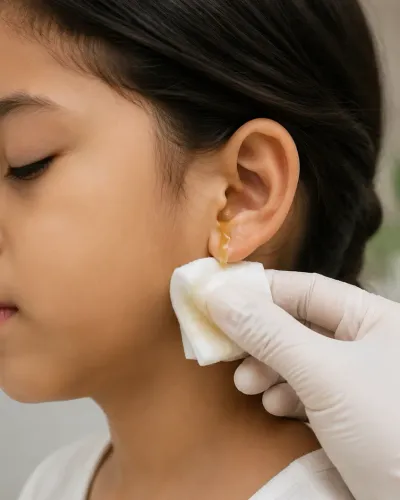

Occasional ear itching may result from dry skin or temporary irritation. When itching continues, becomes intense, or occurs with pain and discharge, it may indicate inflammation of the ear canal, a skin condition, or an infection that needs appropriate evaluation.
Repeated scratching usually provides only short-lived relief. It can damage the delicate canal lining and make the underlying problem worse.
Why Ears Become Itchy
The ear canal contains a thin layer of protective wax. Removing too much of it can leave the skin dry and vulnerable. Common reasons for persistent itching include:
- Overcleaning with cotton buds
- Water remaining after swimming or bathing
- Irritation from earbuds or hearing aids
- Eczema, psoriasis, or dermatitis
- Bacterial or fungal infection
- Sensitivity to hair products or ear jewellery
- Excessive or impacted earwax
In hot or humid conditions, trapped moisture can encourage inflammation of the outer ear canal. Shampoo, soap, sweat, and frequent earphone use may further irritate sensitive skin.
Dryness Compared With Infection
A dry canal may feel flaky or mildly itchy without significant pain. Infection is more likely when itching is accompanied by increasing tenderness, swelling, blocked hearing, unpleasant odour, or discharge.
Fungal infections can cause marked itching and debris in the canal, while bacterial infections may produce pain and swelling. These distinctions are difficult to make without examining the ear.
Using antibiotic, antifungal, or steroid drops without a diagnosis may delay recovery. Some drops are also unsuitable when the eardrum is perforated.
Habits That Commonly Prolong the Problem
People often try to relieve itching by inserting cotton buds, fingernails, pens, or other objects. This creates microscopic injuries that allow infection to develop.
Other avoidable mistakes include:
- Pouring oil into an ear that is painful or discharging
- Sharing prescription ear drops
- Continuing to use contaminated earbuds
- Swimming while the ear canal is inflamed
- Stopping prescribed drops as soon as itching improves
- Wearing a hearing aid without cleaning its earmould properly
The medical guidance on otitis externa from Guy’s and St Thomas’ NHS Foundation Trust identifies water, soap, shampoo, cotton buds, and scratching as common triggers for ear-canal inflammation.
What Evaluation May Involve
An appointment for ear itching treatment in Bangalore usually begins with an examination of the outer ear, canal, and eardrum. The clinician looks for dry skin, wax, swelling, fungal material, bacterial discharge, foreign bodies, or signs of a perforation.
Treatment may involve professional cleaning, keeping the canal dry, or condition-specific medication. If dermatitis is contributing, longer-term skin care and trigger avoidance may be more useful than repeatedly treating presumed infections.
A sample of discharge is sometimes required when symptoms recur or do not respond as expected.
Practical Ear-Care Measures
Until the cause is known:
- Keep objects out of the ear canal.
- Dry only the outer ear after bathing.
- Avoid unprescribed drops and home mixtures.
- Clean earbuds and hearing-aid components regularly.
- Pause swimming if water worsens the irritation.
- Avoid scratching, even when the itching is distracting.
People living or working around Munnekollal may experience a combination of humidity, dust exposure, sweating, and long hours with in-ear devices. These factors can aggravate irritation, but persistent itching still deserves a proper diagnosis rather than repeated self-cleaning.
Seek prompt care if itching is accompanied by severe pain, rapidly increasing swelling, fever, dizziness, reduced hearing, bloody discharge, or redness spreading around the ear. Early assessment is particularly important for anyone with diabetes or reduced immunity.
Effective treatment does more than suppress the itch. It restores the protective condition of the canal, addresses infection when present, and prevents the scratch-inflammation cycle from continuing.
Keywords