
Ear pain, snoring, mouth breathing, delayed speech and repeated throat infections do not all need the same treatment, and some require urgent assessment. By the end, you will know when to book a child ENT visit, how to prepare, what the clinician may examine or test, and how the resulting plan can protect your child’s hearing, sleep, breathing and development.
Key takeaways
- Seek urgent care for breathing trouble, severe swelling, heavy bleeding, or a suddenly unresponsive child.
- Bring symptom timelines, medicine details, school concerns, and previous hearing or ENT reports.
- Expect an ear, nose, throat, hearing, breathing, and speech-related assessment tailored to your child.
- Use examination findings to avoid unnecessary medicines and schedule follow-up only when needed.
When does your child need an ENT OPD visit, and when is it urgent?
Book a pediatric OPD consultation in Bangalore for recurring ear pain or discharge, hearing concerns, delayed speech, persistent nasal blockage, mouth breathing, recurrent tonsillitis, post-nasal cough, snoring, swallowing difficulty, or frequent sinus symptoms.
A child who seems to hear you can still have middle-ear fluid, so a child ENT OPD in Bangalore may recommend tympanometry and formal audiology. Fluid without acute infection is usually observed rather than treated with antibiotics; if it lasts three months, hearing assessment becomes important.
| Situation | What to do | Why it matters |
|---|---|---|
| Recurrent symptoms, suspected fluid, snoring, or speech concerns | Arrange a routine OPD visit | Assessment can identify hearing loss, airway obstruction, or another cause |
| One-sided foul-smelling nasal discharge or blockage | Seek same-day examination | A nasal foreign body needs removal; a button battery can injure tissue rapidly |
| Sudden hearing loss, breathing difficulty, inability to swallow fluids, or rapidly increasing neck swelling | Seek emergency care now | Delay can threaten breathing, hydration, or hearing |
| High fever with a stiff neck, severe dehydration, or heavy bleeding after tonsil or adenoid surgery | Go to emergency care immediately | These signs can indicate a serious infection, fluid loss, or postoperative bleeding |
For snoring, seek prompt assessment when you hear pauses or gasps, or notice restless sleep, daytime inattention, mouth breathing, or poor growth. After surgery, increasing throat bleeding, difficulty breathing, inability to drink, or very little urine needs urgent review.
How can you prepare for a useful child ENT consultation?
Bring a dated symptom record, prior audiograms, tympanograms, newborn or school hearing-screening results, medication list, and antibiotic names with dates. For each ear or throat episode, note fever, discharge, examination findings, whether fluid was present, treatment, and recovery. “Many infections” is less useful than six dated entries.
- Infants: record feeding difficulty, noisy breathing, sleep pauses, response to sound, and developmental milestones. An appointment is especially important after a failed newborn hearing screen; passing it does not rule out hearing loss that develops later.
- Toddlers: note word count, unclear speech, ear-pulling, balance changes, and responses to quiet sounds. Ask for hearing testing when speech is delayed, even if your child reacts to loud noises.
- School-age children: collect teacher comments about attention, listening, pronunciation, classroom performance, and repeated requests to increase volume. Bring every previous hearing report.
- Teenagers: record one-sided hearing changes, tinnitus, dizziness, headphone exposure, recurrent throat symptoms, nasal blockage, and sleep problems.
Record a short, dated video of snoring, gasping, mouth breathing, restless sleep, or unusual voice quality if it is safe to do so. During a pediatric ENT appointment in Bangalore, describe triggers, duration, missed school, and what improved or failed.
Do not rely on visual responses alone; tympanometry and formal audiology can detect fluid or mild, fluctuating, one-sided, or high-frequency hearing loss.
What happens during the examination, and which tests might follow?
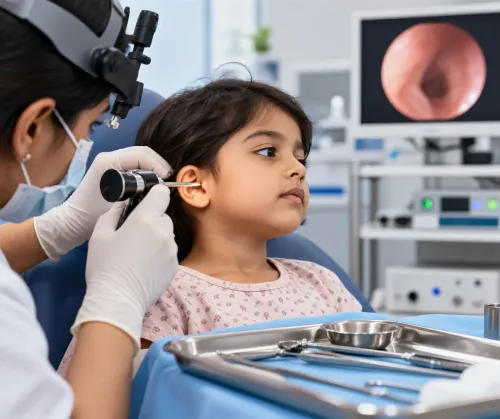
The clinician examines the ear canals and eardrums with an otoscope, then checks the nose, throat, tonsils, neck and jaw. They watch breathing at rest, listen to the voice, and observe swallowing, nasal speech, mouth breathing and age-appropriate responses to sound.
In a children ENT consultation in Bangalore, hearing is not judged by whether your child turns toward you. A pediatric OPD consultation in Bangalore may include play-based responses, speech recognition or objective testing, even when hearing seems normal. A passed newborn screen also does not exclude hearing loss that develops later.
The examination findings and symptoms determine the next test. Common choices include:
| Test | What it checks | When it is selected |
|---|---|---|
| Tympanometry | Eardrum movement and middle-ear fluid | Ear fullness, recurrent infections, unclear hearing or suspected fluid |
| Audiometry | Hearing thresholds and speech understanding | Hearing, learning, speech or language concerns; older cooperative children |
| Otoacoustic emissions | Inner-ear hair-cell function | Infants, toddlers or children unable to complete behavioral audiometry |
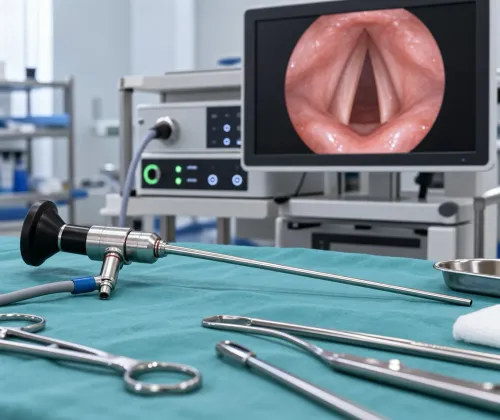
| Nasal endoscopy | Nasal passage, adenoids and obstruction | Persistent mouth breathing, blockage, nasal voice or suspected adenoid enlargement |
| Sleep study | Breathing, oxygen and awakenings during sleep | Snoring with pauses, gasping, restless sleep, daytime problems or poor growth |
| Imaging | Bone, sinus, neck or deeper structural detail | Suspected complication, unusual swelling or anatomy that examination cannot explain |
| Speech-language assessment | Communication, articulation and language development | Delayed speech, unclear speech or confirmed hearing loss requiring rehabilitation |
How can an OPD assessment prevent missed problems and unnecessary treatment?
A structured assessment prevents a fever, fluid-filled middle ear, or ordinary snoring from being labelled an infection. A child ENT OPD in Bangalore uses the history, eardrum examination and hearing results to match treatment to the actual problem.
1. The clinician separates acute otitis media from otitis media with effusion. Pain, fever and a bulging eardrum support acute infection; fluid without acute inflammatory signs is usually observed, not treated with antibiotics. If fluid lasts three months, arrange age-appropriate hearing testing before considering surgery.
2. Delayed or unclear speech requires hearing assessment even when your child responds to loud sounds. Tympanometry can detect fluid, while behavioural or objective audiometry can reveal mild, fluctuating, one-sided or high-frequency loss that casual observation misses.
3. Recurrent ear disease is counted, not guessed: at least three acute episodes in six months, or four in 12 months with one during the preceding six months, qualifies for discussion of tympanostomy tubes. Tubes are an option, not an automatic requirement; fluid and hearing findings affect the decision.
4. A children ENT consultation in Bangalore should investigate snoring and mouth breathing for sleep-disordered breathing. Witnessed pauses, gasping, restless sleep, daytime inattention, behaviour changes or poor growth raise concern; enlarged tonsils or adenoids are not the only possible cause.
Tonsillectomy requires documented recurrent throat infections or obstructive sleep-disordered breathing with relevant complications. Occasional sore throats alone do not justify surgery, so the assessment protects your child from both missed disease and unnecessary antibiotics, tubes or tonsil removal.
How does the consultation turn findings into a longer-term care plan?
Findings become a care plan when each result is tied to a functional question: Is the child hearing speech clearly, sleeping safely, breathing through the nose, and keeping pace with communication and schoolwork? A pediatric OPD consultation in Bangalore should end with named next steps, responsible professionals, and a review date—not only a diagnosis.
- Follow-up: Recheck symptoms, ear fluid, hearing, growth, sleep, or treatment response on a stated timeline. Fluid behind the eardrum lasting three months or longer warrants an age-appropriate hearing test.
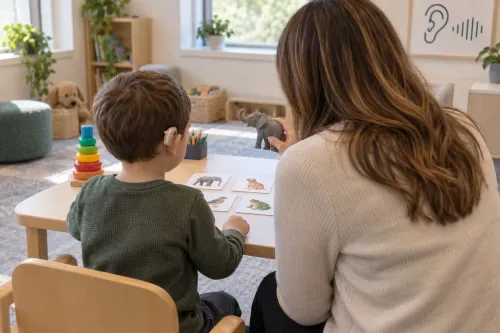
- Hearing and communication: Arrange hearing aids or other hearing technology when indicated, repeat audiology, and refer for speech-language therapy. A child who responds to loud sounds can still have mild, fluctuating, one-sided, or high-frequency loss.
- School support: Share recommendations for classroom seating, reduced background noise, assistive listening equipment, or extra language support when hearing affects learning.
- Allergy and airway care: Coordinate nasal treatment, trigger control, sleep assessment, or airway evaluation for persistent blockage, mouth breathing, or snoring.
- Surgery: Consider tubes, adenoid or tonsil surgery only when documented hearing, breathing, infection, sleep, or developmental effects justify the risks.
Families should leave a pediatric ENT appointment in Bangalore knowing what to monitor, which report to obtain, and when to return. At Dr. Sohini's ENT Care - Empathy meets Expertise, nasal endoscopy can help resolve persistent one-sided blockage before prolonged allergy treatment is chosen.
Related service
OPD Consultation and Procedures Welcome to the Ear, Nose, and Throat (ENT) outpatient department (OPD) consultation with Dr. View service → |
Frequently asked questions
When does a child need an ENT OPD visit, and when is it urgent?
Arrange an ENT visit for recurring ear pain or discharge, hearing concerns, delayed speech, persistent nasal blockage, mouth breathing, recurrent tonsillitis, post-nasal cough, snoring, swallowing difficulty, or frequent sinus symptoms. Seek urgent care for breathing difficulty, severe throat or neck swelling, uncontrolled bleeding, or a child who becomes unusually unresponsive.
How can parents prepare for a useful child ENT consultation?
Record when symptoms started, how often they occur, triggers, sleep disruption, school or speech concerns, and medicines already used. Bring previous prescriptions, hearing reports, scans, and a list of allergies and medical conditions.
What happens during a pediatric ENT examination?
The clinician reviews symptoms and examines the ears, nose, throat, neck, breathing pattern, and related structures. Depending on the findings, the child may need a hearing test, tympanometry, nasal assessment, throat evaluation, or another targeted investigation.
How can an OPD assessment prevent missed problems and unnecessary treatment?
A structured examination connects symptoms with findings instead of relying on repeated medication alone. It can identify hearing loss, enlarged adenoids, persistent middle-ear fluid, sleep-related breathing concerns, or other causes that need specific follow-up.
How does a pediatric ENT consultation become a longer-term care plan?
The clinician explains the likely cause, treatment options, warning signs, and review timing. The plan may include observation, medicines, hearing or speech support, environmental changes, further tests, or surgery when the findings justify it.
Keywords