Sleep apnea surgery is not one standard operation: the procedure, fasting instructions, admission timing, monitoring, and recovery depend on where the airway collapses and how extensive the surgery is. By the end, you will know what to prepare, what happens from hospital check-in to discharge, and which recovery symptoms require urgent help.
Key takeaways
- Bring sleep-study reports, medication details, and your CPAP history.
- Follow the hospital’s fasting instructions and ask which medicines to take.
- Expect airway monitoring, pain control, and oxygen checks after surgery.
- Contact your surgeon for breathing trouble, heavy bleeding, dehydration, or persistent fever.
Before admission: how the team decides whether surgery fits
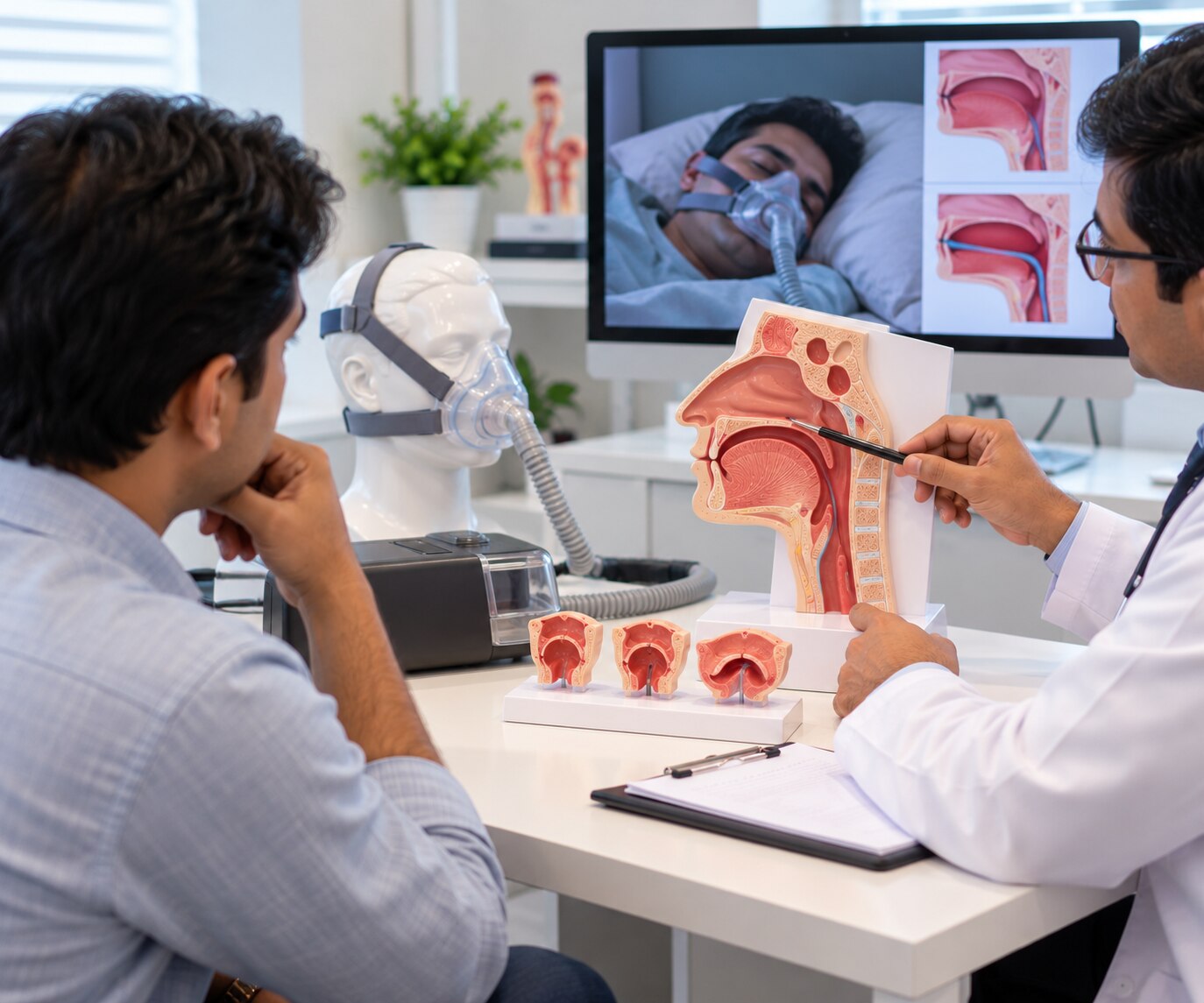
Doctors first confirm obstructive sleep apnea with a sleep study, then locate where your airway closes. Symptoms alone cannot choose an operation. The ENT surgeon reviews your sleep-study results, severity, daytime effects, weight, tonsils, nose, palate, jaw and tongue base, along with previous CPAP or oral-appliance use.
To understand what happens during sleep apnea surgery in Bangalore, ask which finding makes the proposed operation suitable.
| Option | What it addresses | When it fits |
|---|---|---|
| Nasal surgery | A blocked nasal passage | Nasal obstruction limits breathing or CPAP use |
| Tonsillectomy or palate surgery | Enlarged tonsils or collapse at the soft palate | Examination identifies obstruction in the throat |
| Tongue-base surgery | Collapse behind the tongue | The tongue base contributes to airway blockage |
| Maxillomandibular advancement | A narrow airway linked to jaw position | Significant skeletal restriction requires a larger correction |
| Hypoglossal-nerve stimulation | Reduced tongue-muscle opening during sleep | Selected patients meet device and anatomy criteria |
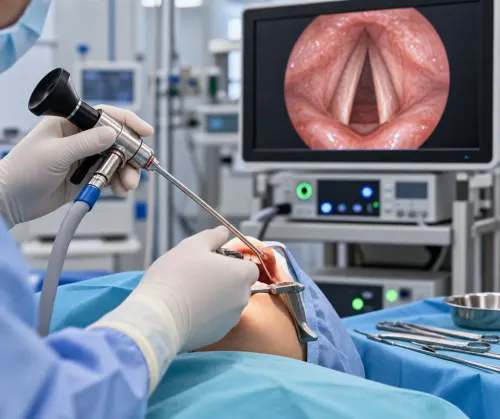
For adults, surgery is usually considered after CPAP, an oral appliance, weight management, and positional measures fail, prove unsuitable, or cannot be tolerated. The team may use airway endoscopy, including a sleep assessment of collapse, when the examination does not show the full pattern.
Multilevel obstruction can require combined procedures, while surgery is the wrong fit if the diagnosis is uncertain or expected benefit is low.
An anaesthetist also reviews your airway, allergies, medicines, previous anaesthesia problems, and heart or lung conditions. Obstructive sleep apnea raises the risk of airway blockage after sedatives, opioids, and general anaesthesia, so this assessment helps determine whether surgery and postoperative observation are safe.
Ask for the exact procedure name and how success will be checked after healing.
Sleep apnea surgery preparation in Bangalore: documents, fasting, and medicines
Bring your identification, admission papers, sleep-study report, scan or endoscopy results, and a current medication list. For sleep apnea surgery preparation in Bangalore, ask the hospital to confirm in writing whether admission is same-day or overnight and which preoperative tests you need.
1. Pack your government ID, referral or consultation records, consent forms if already issued, previous anaesthesia notes, and reports from blood tests, ECG, chest evaluation, or other tests the hospital requested. Keep the surgeon’s and hospital’s emergency contact numbers accessible.
2. Confirm the fasting start time with the surgical team, because it depends on your operation and anaesthesia plan. Do not eat, drink, chew gum, or smoke after the instructed time; ask specifically whether you may take essential tablets with a small sip of water.
3. Give the surgeon and anaesthetist a complete medicine list, including doses and the time of your last dose. Name every anticoagulant or antiplatelet drug, diabetes medicine or insulin, blood-pressure tablet, allergy, supplement, and recreational drug.
4. Tell them that you use CPAP, an oral appliance, or oxygen, and bring the device or its settings if requested. Report asthma, COPD, heart disease, high blood pressure, diabetes, kidney disease, loose teeth, difficult intubation, or any previous anaesthesia reaction.
Never stop warfarin, apixaban, aspirin, clopidogrel, insulin, or another prescribed medicine yourself. The surgeon or anaesthetist must give you the stop-and-restart schedule. Dr. Sohini's ENT Care - Empathy meets Expertise can use this medication and airway history to plan safer coordination with anaesthesia.
Ask whether the written estimate includes anaesthesia, pathology, room or ICU charges, medicines, and follow-up.
Related service
Surgical Procedures Unlock rejuvenating sleep and reclaim vitality with Dr. Sohini's transformative sleep apnea surgery solutions. Dr. View service → |
Admission through the operating room: the sleep apnea surgery process
After check-in, the hospital verifies your identity, consent, planned operation, and surgical site. Nurses record your blood pressure, pulse, oxygen level, temperature, and weight, then ask you to change into theatre clothing and remove dentures, jewellery, contact lenses, or hearing aids as instructed.
1. The anaesthetist reviews your sleep study, airway examination, allergies, medicines, and previous anaesthesia problems. Tell them about blood thinners, diabetes, high blood pressure, heart or lung disease, CPAP use, and any recent infection.
Obstructive sleep apnea raises the risk of airway blockage after sedatives and opioids, so the team plans your breathing support and pain relief carefully.
2. You receive an intravenous cannula and meet the surgical team before entering theatre. Staff confirm the operation again; the exact sequence differs between hospitals and procedures. For the sleep apnea surgery process in bangalore, same-day admission or an overnight stay depends on the operation, your anaesthetic risk, and the hospital’s monitoring policy.
3. Most operations use general anaesthesia. After you are asleep, the anaesthetist places a breathing tube to protect and control the airway. The surgeon performs the planned procedure, such as nasal surgery, tonsil or adenoid removal, throat surgery, tongue-base treatment, or jaw advancement.
Throughout the operation, the anaesthetic team tracks oxygenation, ventilation, blood pressure, heart rhythm, and anaesthetic depth. Before admission, obtain the procedure name, fees, anaesthesia charges, room or ICU costs, medicines, pathology charges, and emergency contact route in writing.
Recovery unit and discharge: what happens immediately after surgery
After surgery, you stay in the recovery unit until you are awake, breathing adequately, and medically stable. Nurses and the anaesthesia team monitor:
- Oxygen saturation and breathing rate
- Airway blockage, snoring, or difficult breathing
- Blood pressure and heart rhythm
- Bleeding from the nose or throat
- Pain, nausea, and vomiting
- Drowsiness caused by opioids or other sedatives
You may need oxygen while the anaesthetic wears off. A patient with significant obstructive sleep apnea, difficult airway control, heavy opioid use, or extensive throat surgery may need prolonged observation or overnight admission instead of routine same-day discharge.
You can leave when your oxygen level and vital signs remain satisfactory without intensive support, you are alert enough to follow instructions, pain and nausea are controlled, and you can drink if the procedure permits. Arrange an adult to take you home; do not drive after general anaesthesia.
The hospital may also require someone to stay with you during the first night.
The practical pattern for sleep apnea operation recovery in Bangalore depends on the procedure, anaesthetic risk, and hospital policy. Confirm before admission whether discharge is planned for the same day, what observation period applies, and whom to call if breathing difficulty or fresh bleeding begins.
Sleep apnea surgery aftercare in Bangalore: pain, warning signs, and follow-up
Pain and throat swelling can make swallowing uncomfortable for several days. Take prescribed pain medicine on schedule, sip fluids frequently, choose soft foods, rest with your head elevated, and avoid smoking, alcohol, and strenuous activity until the surgical team permits them. Do not change or add medicines without checking first.
Your discharge instructions should state when to restart CPAP or an oral appliance. Ask before using either device: the answer depends on the operation, swelling, pain, mask fit, and the surgeon’s instructions. Do not assume surgery makes CPAP unnecessary.
Seek urgent help through the operating hospital’s emergency number or an emergency department in Bangalore if you have:
- Fresh or persistent bleeding from the nose or throat
- Breathing difficulty, blue lips, or unusual difficulty staying awake
- Repeated vomiting or inability to keep fluids down
- Very little urine, severe dizziness, or other signs of dehydration
- Fever or pain that suddenly worsens despite prescribed treatment
Follow-up checks healing, swallowing, breathing, and the surgical site. The doctor may review CPAP data, examine your airway, or arrange a repeat sleep study after healing; symptoms alone cannot prove that apnea has gone. The result determines whether you need CPAP, an oral appliance, or further treatment.
Good sleep apnea surgery aftercare in Bangalore includes keeping every follow-up appointment and asking for the testing date before discharge.
Frequently asked questions
How does a surgeon decide whether sleep apnea surgery is suitable?
The surgeon reviews your sleep study, apnea severity, daytime effects, weight, tonsils, nose, palate, jaw and tongue base, plus previous CPAP or oral-appliance use. Examination and airway assessment help identify where obstruction occurs and whether surgery fits.
What should I do before admission for sleep apnea surgery in Bangalore?
Carry your sleep-study report, scan or endoscopy records, prescriptions, allergy details, identification and insurance documents. Follow the hospital’s fasting instructions and confirm which medicines to take or pause, especially blood thinners and diabetes medicines.
What happens during the sleep apnea surgery process?
After admission, the team confirms your identity, procedure, consent, fasting status and medicines. Anaesthesia staff assess you before the operation, then monitor breathing, oxygen, blood pressure and heart rate throughout surgery and recovery.
What happens during sleep apnea operation recovery and aftercare?
In the recovery unit, staff monitor your airway, oxygen level, pain, nausea and bleeding. Before discharge, you receive instructions for medicines, fluids, food, activity, wound or throat care and follow-up. Seek urgent medical help for breathing difficulty, heavy bleeding, inability to drink, or worsening symptoms.
Keywords