A blocked ear is not automatically a wax problem, and the wrong cleaning method can worsen pain, bleeding or hearing loss. By comparing examination, suction, manual removal and irrigation, you can identify when professional removal is appropriate and what to ask before booking care in Bangalore.
Key takeaways
- Do not remove wax if it causes no symptoms or hearing loss.
- Avoid cotton buds, hairpins, ear candles and home irrigation.
- Suction suits narrow, painful or medically complex ear canals.
- Confirm examination, sterile instruments and aftercare before booking.
Is the blockage actually earwax, and does it need removal?
A blocked ear is not automatically a dirty ear, and a small visible amount of cerumen usually needs no treatment. Earwax normally migrates outward without routine internal cleaning. Cotton buds, hairpins and ear candles can push it deeper, scratch the canal or leave burns and candle wax behind.
Removal is justified when wax causes reduced hearing or fullness, blocks examination, interferes with a hearing aid, or prevents an essential hearing test.
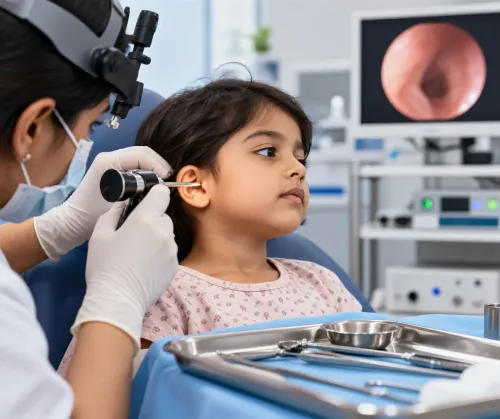
Before any ear wax removal in Bangalore, an otoscope or ear endoscope should confirm that the material is wax and check for infection, fungal debris, a foreign body, canal inflammation, perforation or middle-ear disease.
- Seek examination instead of cleaning at home if you have severe pain, fever, foul discharge, bleeding, vertigo, facial weakness or sudden hearing loss. Sudden sensorineural hearing loss can feel like a blocked ear and needs time-sensitive assessment.
- Avoid unsupervised cleaning if you have diabetes, immune suppression, chronic ear disease, previous ear surgery or recurrent impaction.
- Ask the clinician to inspect the eardrum again after clearance. If hearing remains reduced, the cause may not have been wax.
Do not irrigate or insert anything simply because the ear looks blocked. Diagnosis must come before removal.
How do suction, manual cleaning and irrigation differ in practice?
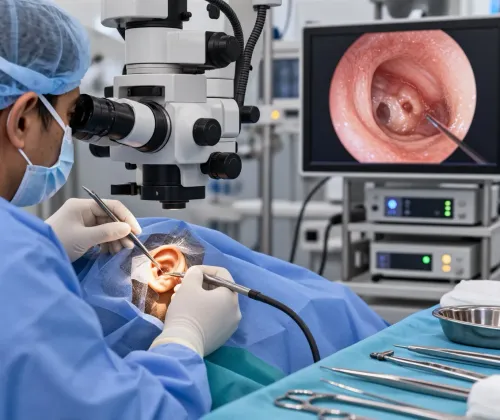
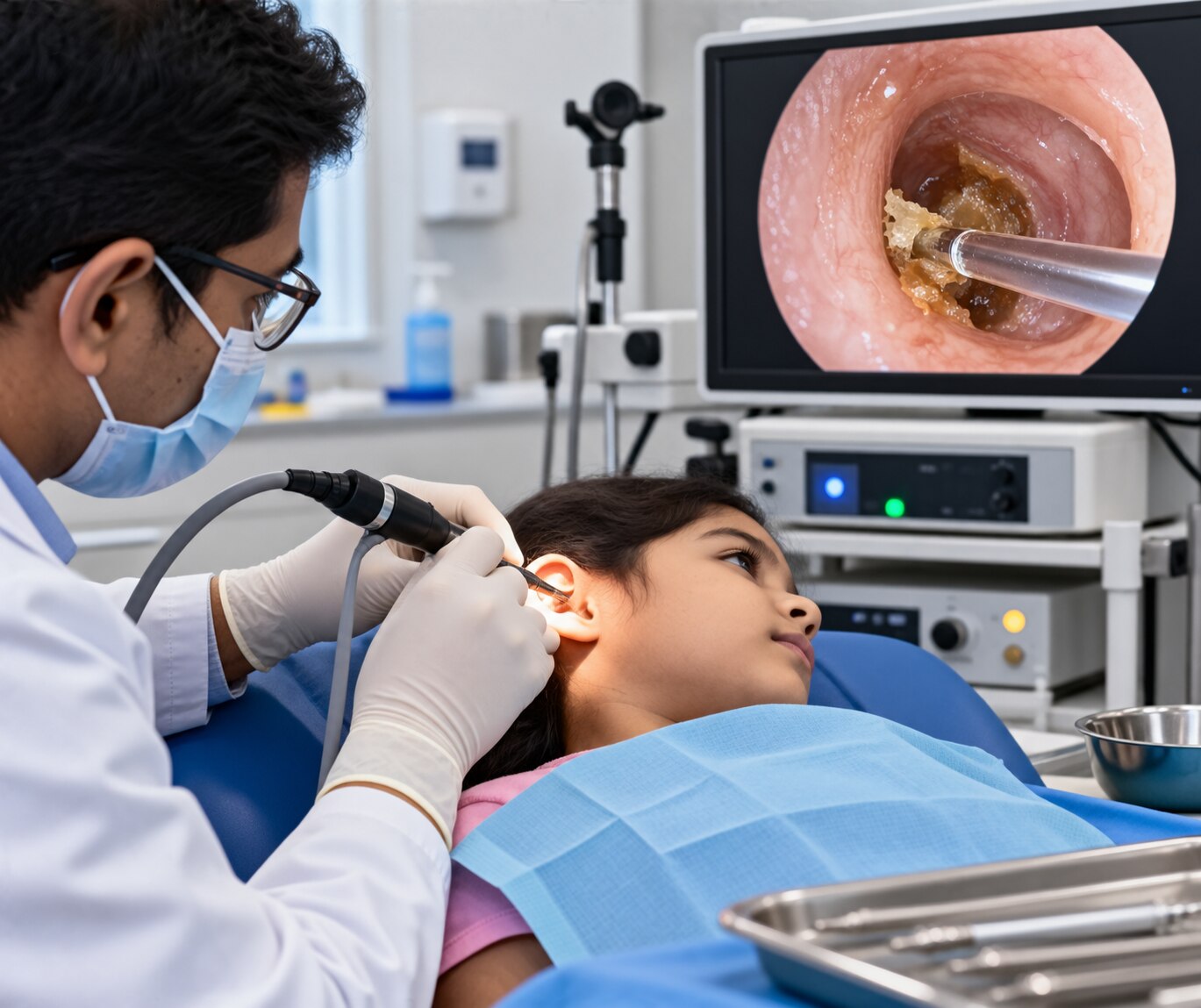
The practical difference in endoscopic suction clearance versus ear cleaning in Bangalore is how the clinician sees and removes the wax. Endoscopic suction clearance uses a small endoscope or magnification for direct vision, with controlled suction and fine instruments guiding removal around the canal and eardrum.
| Option | What happens during the appointment | What you may experience |
|---|---|---|
| Endoscopic suction clearance | Wax is removed under direct vision with controlled suction and fine instruments. | A loud suction sound, pressure, mild discomfort, a brief cough, temporary tinnitus or short-lived dizziness. |
| Manual removal | A clinician lifts or extracts wax with a curette or fine forceps after inspecting the canal. | Pressure or mild discomfort, especially if wax is hard or attached to the canal wall. |
| Irrigation | Body-temperature water flushes softened wax from the canal. | Fullness, water movement and brief dizziness if the water is too cold or hot. |
Local anaesthetic is not automatic. The clinician decides after assessing tenderness, canal inflammation and the wax’s amount and location.
“Regular ear cleaning” can mean manual removal or syringing, so ask which method is planned. Straightforward clearance can fit one outpatient visit; hard impaction, inflammation, poor tolerance or incomplete visibility can require softening and a second appointment.
Endoscopic guidance improves visibility, but the label alone does not guarantee a better outcome than every conventional method. Results depend on the wax, canal anatomy, equipment, clinician skill and your ability to remain still.
When is suction the better choice than routine cleaning or syringing?
Hard, impacted wax beside the eardrum is a strong reason to choose suction under direct vision. The same applies when wax is stuck to the canal wall, the canal is narrow or highly sensitive, there is pain or discharge, the diagnosis is uncertain, or irrigation cannot be performed safely.
| Option | What happens | When it fits |
|---|---|---|
| Suction with endoscopic vision | A clinician sees the canal and eardrum while using controlled suction and fine instruments. | Hard, adherent, eardrum-adjacent wax; discharge; pain; narrow or sensitive canals. |
| Manual removal | A curette or fine forceps lifts material under direct inspection. | When the material can be lifted safely and you can remain still. |
| Irrigation | Body-temperature water flushes softened wax outward. | Only when the eardrum is intact and the canal is suitable. |
Do not undergo irrigation with any of these findings:
- Known or suspected eardrum perforation
- A ventilation tube
- Previous ear surgery
- Active infection
- Severe canal narrowing
- Inability to cooperate or remain still
Endoscopic suction is not automatically the right first step. A foreign body, fungal debris, severe inflammation, middle-ear disease or sudden hearing loss requires diagnosis and treatment, not a cleaning procedure.
If you search for “suction clearance under endoscopic guidance in Bangalore,” disclose previous surgery, tubes, perforation, discharge and recurrent ear disease before booking. Ask for an examination that confirms the material is wax and checks the eardrum, rather than assuming the advertised technique suits your ear.
What preparation and safety checks should you expect?
Wax-softening drops can make hard wax easier to remove, but they are not automatically safe if a perforation or ear tube is possible. Use oil- or water-based drops only after a clinician confirms that they suit your ear, and follow the advised schedule. Do not insert them immediately before an unknown procedure.
| Method | Preparation and safety check | Risks to weigh |
|---|---|---|
| Endoscopic suction | The clinician checks the canal and eardrum, then removes wax under direct vision. | Canal abrasion, pain, minor bleeding, temporary dizziness or tinnitus; excessive suction or contact can injure the eardrum. |
| Manual removal | A curette or fine forceps lifts softened wax while you remain still. | Instrument contact can cause abrasion, bleeding, pain, retained wax or infection. |
| Irrigation | Wax must be softened, and the water must be close to body temperature. | Cold or hot water can provoke dizziness; pressure can injure the eardrum and irrigation is unsafe with a perforation or tube. |
During removal, stay still and report sharp pain immediately. Any professional method can cause short-lived discomfort, minor bleeding, temporary tinnitus or dizziness, retained wax or infection. If you are searching for endoscopic ear cleaning near me, ask which checks and method the appointment includes.
Afterward, seek review for persistent pain, discharge, marked hearing loss, bleeding or prolonged vertigo. Do not use ear candles: they can burn the ear and leave candle wax obstructing the canal without reliably removing cerumen.
How should you choose an ear-wax service in Bangalore?
Before booking ear wax removal in Bangalore, confirm that the visit starts with an otoscope or ear endoscope, not removal by default. The clinician should identify wax, inspect the canal and confirm an intact eardrum before choosing suction, manual removal or irrigation.
“Endoscopic ear cleaning near me” and a convenient location do not establish suitability for your ear.
Ask these questions before you book:
- How will a perforation, ventilation tube, previous ear surgery, active discharge or a narrow canal change the plan?
- Is local anaesthetic available if the canal is painful?
- How long should straightforward clearance take, and could hard wax or poor visibility require another appointment?
- What follow-up is offered if hearing remains reduced after the wax is removed?
| Method | What happens | When it fits |
|---|---|---|
| Endoscopic suction | Wax is removed under direct vision with controlled suction and fine instruments | Hard, impacted, eardrum-adjacent or adherent wax; irrigation is unsuitable |
| Manual removal | A curette or fine forceps lifts wax from the canal | Material can be reached safely and you can remain still |
| Irrigation | Body-temperature water flushes softened wax outward | An intact eardrum, no tube, no active infection and a canal wide enough for safe flushing |
Dr. Sohini's ENT Care - Empathy meets Expertise can be considered when painful, recurrent or unclear symptoms need ENT assessment alongside removal. Choose examination-led care, not a procedure selected without checking the canal and eardrum.
Related services
OPD Consultation and Procedures Suction clearance under Endoscopic Guidance Experience unparalleled suction clearance with Dr. Sohini Chakrabarti's expertise and Endoscopic Guidance. As a distinguished otolaryngologist, Dr. View service → |
OPD Consultation and Procedures Discover advanced and precise ear care with Dr. Sohini Chakrabarti's Ear Endoscopy services. Dr. View service → |
Frequently asked questions
How can you tell whether a blocked ear contains earwax?
An ENT examination is needed because fullness or reduced hearing can also result from infection, fluid, a foreign body or eardrum problems. Visible wax does not always need removal.
How do suction, manual ear cleaning and irrigation differ?
Suction uses a small instrument under direct endoscopic vision, manual cleaning removes wax with specialised tools, and irrigation flushes the canal with controlled water. The safest method depends on the wax, canal and eardrum.
When is endoscopic suction clearance preferable to syringing?
Suction is useful when the canal is narrow, the wax is hard or impacted, irrigation is unsuitable, or the clinician needs precise visual control. Avoid irrigation when the eardrum is perforated or its condition is unknown.
What safety checks should you expect before ear-wax removal?
The clinician should ask about pain, discharge, previous ear surgery, eardrum perforation and hearing symptoms, then examine the canal and eardrum before selecting a method.
How should you choose an ear-wax removal service in Bangalore?
Choose a qualified ENT service that examines your ear first, explains the method, uses appropriate instruments and provides clear advice about warning symptoms and follow-up.
Related service
OPD Consultation and Procedures Synringing Discover effective earwax management with Dr. Sohini Chakrabarti's expert Synringing services. As a distinguished otolaryngologist, Dr. |
Keywords