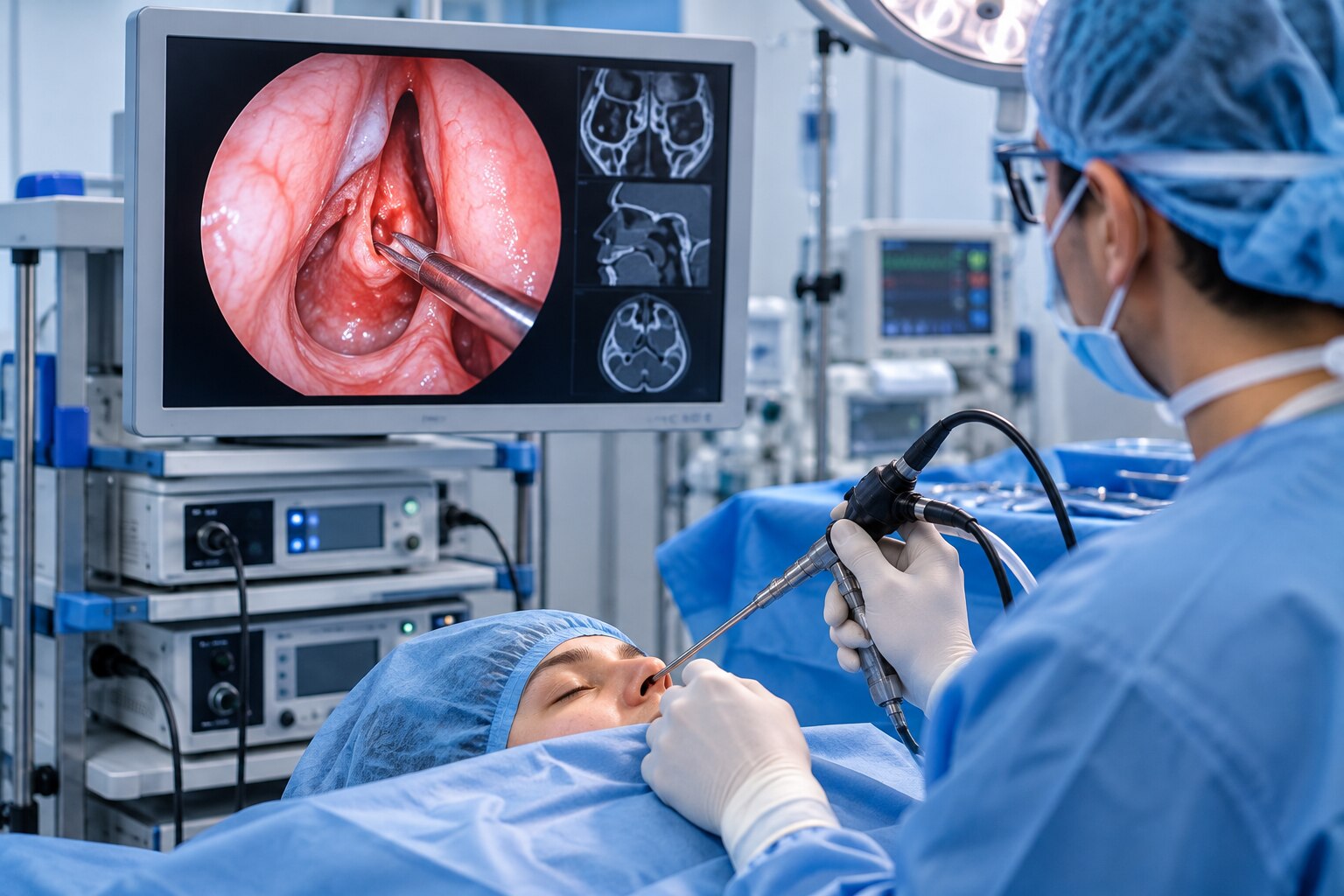
Persistent nasal blockage, repeated sinus infections, reduced smell, facial pressure and nasal polyps do not all point to the same operation. By checking the symptom pattern, objective findings and response to non-surgical care, you can understand when surgery is reasonable, which procedure addresses the problem and when another diagnosis needs attention first.
Key takeaways
- Chronic symptoms lasting 12 weeks need objective inflammation evidence before surgery.
- The blockage’s cause determines whether you need sinus, septal or turbinate surgery.
- CT scans and nasal endoscopy help assess endoscopic sinus surgery suitability.
- Seek urgent care for eye swelling, vision changes, severe headache or neurological symptoms.
Which symptoms and diagnoses make surgery worth considering?
The strongest candidates are people with chronic rhinosinusitis lasting at least 12 weeks despite appropriate medical care. Symptoms include nasal obstruction, nasal discharge, facial pressure or reduced smell, but suitability also requires inflammation confirmed by nasal endoscopy or a CT scan of the paranasal sinuses.
| Pattern | Findings that support surgery | What it is not |
|---|---|---|
| Chronic rhinosinusitis | Symptoms for at least 12 weeks plus objective inflammation | Symptoms alone |
| Recurrent acute rhinosinusitis | Four or more objectively diagnosed episodes in one year | Continuous symptoms without symptom-free intervals |
| Nasal polyps | Obstruction, repeated infection, smell loss or poor delivery of topical medicine despite treatment | A guarantee that polyps will not recur |
| Complicated sinus disease | Orbital infection, intracranial spread, a mucocele or another serious complication | A routine elective problem |
Recurrent acute rhinosinusitis is separate from continuous chronic symptoms: each episode should resolve, leaving symptom-free intervals. Ongoing congestion between “attacks” points toward chronic rhinosinusitis, allergy or another diagnosis that needs assessment.
Nasal polyps can make endoscopic surgery worth considering when they block airflow, impair smell, contribute to repeated infection or prevent saline and prescribed sprays from reaching diseased areas. A deviated septum can justify septoplasty when it causes persistent one-sided or bilateral obstruction, even without sinus inflammation.
Sinus disease with orbital or intracranial complications requires prompt specialist care.
These criteria guide who needs endoscopic nasal and sinus surgery in Bangalore and inform sinus surgery applications in Bangalore, but location does not establish suitability. An examination, endoscopy, relevant imaging and treatment history must support the proposed operation.
Which cause of chronic blockage determines the operation?
Persistent blockage does not identify the operation. A doctor matches the confirmed source—using history, nasal examination and endoscopy—to the procedure that can correct it; nasal surgery for chronic blockage in Bangalore is appropriate only when those two match.
| Cause | How it is distinguished | Usual treatment |
|---|---|---|
| Deviated septum | Fixed one-sided or bilateral narrowing from a crooked septum | Septoplasty straightens the obstructing septum |
| Enlarged turbinates | Bulky turbinate tissue, often with variable congestion | Turbinate reduction decreases excess tissue |
| Allergic or non-allergic rhinitis | Swelling and runny or blocked nose without a structural sinus obstruction | Trigger control and medicines, not sinus surgery alone |
| Nasal-valve narrowing | Collapse or tightness at the nasal entrance, assessed during examination | Nasal-valve treatment or repair |
| Medication-overuse congestion | Persistent swelling after frequent topical decongestant use | Stop the offending spray with medical guidance |
| Nasal polyps | Pale, soft tissue seen on endoscopy, often with smell loss | Polyp surgery removes obstructing tissue; anti-inflammatory treatment remains necessary |
| Chronic sinus inflammation | Endoscopic evidence of inflamed or blocked sinus openings, supported by CT when indicated | Functional endoscopic sinus surgery opens affected pathways and removes obstructing or diseased tissue |
Combined procedures address more than one confirmed source, such as septal deviation plus turbinate enlargement. Balloon sinus dilation suits selected limited disease, but it cannot remove polyps, a mass or diseased tissue, so it is not interchangeable with full endoscopic surgery. This cause-based assessment is central to endoscopic sinus surgery suitability in bangalore.
How is endoscopic sinus surgery suitability assessed?
Suitability is assessed after prescribed medicines and other non-surgical care have been tried, not from a CT report alone. Endoscopic sinus surgery suitability in Bangalore depends on the diagnosis, symptom burden and objective findings.
1. The clinician reviews duration, severity and functional effect. Chronic rhinosinusitis means symptoms lasting at least 12 weeks; meaningful treatment failure has no fixed duration beyond that definition. It depends on the diagnosis, adequate use of treatment and shared clinical judgment.
2. Treatment response is examined. This includes prescribed intranasal corticosteroid sprays, saline irrigation and allergy management. Antibiotics are used only when bacterial infection is clinically indicated. A short course of oral corticosteroids may be selected for particular inflammatory conditions, not given automatically.
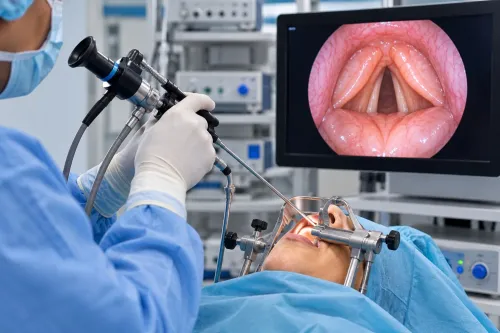
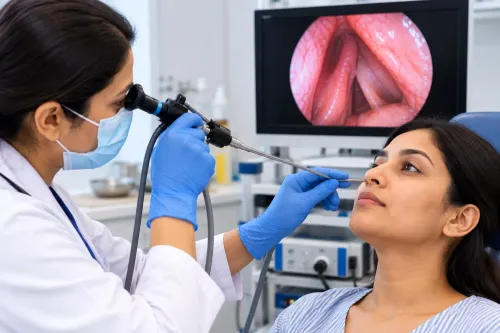
3. Examination and nasal endoscopy look for swelling, polyps, pus, narrowing, structural blockage and disease in the sinus openings. Persistent symptoms without matching inflammation may point to another cause and weaken the case for sinus surgery.
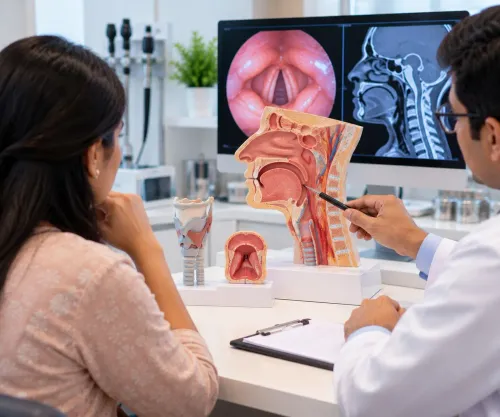
CT of the paranasal sinuses is useful for confirming disease distribution, mapping anatomy before surgery and identifying risks near the orbit or skull base. However, mucosal thickening on CT can be incidental. CT cannot replace symptom assessment or nasal endoscopy, and surgery is considered only when the findings and treatment response support a likely benefit.
When is surgery the wrong choice, and when is delay unsafe?
Sinus surgery is usually the wrong first choice for isolated allergy, short-lived congestion, acute viral sinusitis, untreated reflux or allergy, medication-overuse congestion, migraine, dental pain or facial pain. Treating the cause matters: stop repeated topical decongestant use under guidance, manage allergy or reflux, and assess migraine or dental disease separately.
Facial pain without objective inflammation is unlikely to be reliably cured by sinus surgery.
A blocked nose can also come from adenoid disease or nasal-valve narrowing rather than diseased sinuses. Symptoms without inflammation on nasal endoscopy or appropriate imaging need another explanation, not an operation. These distinctions matter when considering sinus surgery applications in Bangalore.
Do not let routine medical treatment delay prompt specialist assessment if you have:
- Orbital or intracranial infection
- A mucocele
- Suspected invasive fungal sinusitis or another aggressive fungal process
- A suspicious unilateral mass or visible nasal mass
- Unilateral foul-smelling discharge
- Recurrent unexplained nosebleeds
- Eye swelling, double vision, reduced vision or other visual change
One-sided symptoms deserve evaluation even when they seem mild. A visible mass, persistent one-sided blockage or bleeding needs examination rather than self-treatment, because a different procedure, biopsy or urgent treatment may be necessary.
What benefits, limitations and follow-up should you expect?
The clearest gains are better nasal airflow, sinus drainage and access for saline or prescribed topical medicines. Smell and facial-pressure relief are less predictable, especially when pain has no objective sinus inflammation.
| Benefit | What surgery can improve | What remains uncertain |
|---|---|---|
| Nasal airflow | Opens obstructed passages and may reduce blockage | Allergy, turbinate swelling or nasal-valve narrowing may still need treatment |
| Sinus drainage | Improves ventilation and drainage from affected sinuses | Inflammatory disease can return |
| Topical treatment | Lets saline and intranasal steroids reach diseased areas | Long-term medicines may still be necessary |
| Smell or facial pressure | May improve when inflammation causes the symptom | Recovery is not guaranteed, particularly for pain without sinus disease |
For patients deciding who needs endoscopic nasal and sinus surgery in Bangalore, recurrence matters as much as the initial result. Polyps and inflammatory disease recur more readily with asthma, aspirin-exacerbated respiratory disease, allergy or extensive polyps; severe recurrent disease can prompt specialist discussion of biologic medicines.
Expect saline rinsing after surgery, prescribed intranasal steroids, follow-up nasal endoscopy and possible debridement to clear crusts and maintain the opening. The schedule varies with the operation and disease. Ask the surgeon to review alternatives, your CT and endoscopy, bleeding, orbital and skull-base risks, and their ability to manage complications.
These points define endoscopic sinus surgery suitability in Bangalore, not geography alone. Dr. Sohini's ENT Care - Empathy meets Expertise can help discuss diagnosis, treatment failure, procedure choice and follow-up.
Related services
Surgical Procedures Endoscopic Nasal and Sinus Surgeries Elevate your nasal health with Dr. Sohini Chakrabarti, a renowned otolaryngologist specializing in transformative nasal surgeries. Dr. View service → |
OPD Consultation and Procedures Experience comprehensive nasal health assessments with Dr. Sohini Chakrabarti's Diagnostic Nasal Endoscopy services. View service → |
Frequently asked questions
Who needs endoscopic nasal and sinus surgery in Bangalore?
People with chronic rhinosinusitis lasting at least 12 weeks despite appropriate medical treatment may benefit when symptoms and inflammation are confirmed by nasal endoscopy or a CT scan.
What determines the operation for chronic nasal blockage?
The cause determines the procedure. A deviated septum may require septoplasty, enlarged turbinates may need turbinate reduction, and diseased sinuses may require endoscopic sinus surgery.
How is endoscopic sinus surgery suitability assessed in Bangalore?
An ENT assessment reviews symptom duration, prior medical treatment, nasal endoscopy findings and a CT scan of the paranasal sinuses when indicated.
When is sinus surgery the wrong choice, and when is delay unsafe?
Surgery is the wrong choice when symptoms lack confirmed structural or inflammatory disease, or when medical treatment has not been tried appropriately. Delay is unsafe with eye swelling, vision changes, severe headache, neurological symptoms or other signs of complications.
What benefits, limitations and follow-up should you expect?
Surgery aims to improve drainage, nasal breathing, recurrent infections and smell when sinus disease causes those problems. It does not guarantee permanent symptom resolution, and follow-up may include nasal cleaning, medicines, endoscopy and treatment of the underlying condition.
Keywords