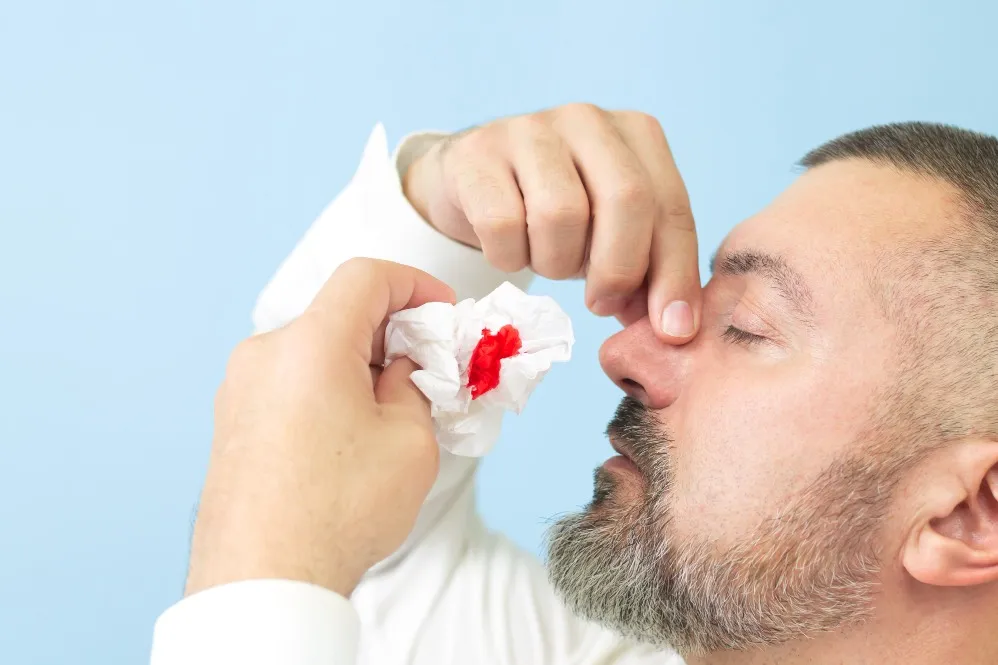
A nosebleed can look alarming because even a small amount of blood spreads quickly. Most episodes begin near the front of the nasal septum and can be controlled with correct first aid. Recurrent, heavy, or unexplained bleeding requires evaluation to find the source and contributing factors.
Knowing what to do during the episode is the first step.
Correct First Aid for a Nosebleed
Sit upright and lean slightly forward. Breathe through the mouth and pinch the soft part of the nose firmly against the septum.
Maintain uninterrupted pressure for 10 to 15 minutes. Releasing every minute to check can prevent a clot from forming.
Avoid:
- Tilting the head backwards
- Lying flat
- Packing the nose with tissue
- Blowing or picking the nose immediately afterwards
- Swallowing blood when it can be spat out safely
A cold compress may feel soothing, but firm pressure is the essential measure.
When a Nosebleed Needs Medical Care
Seek urgent assistance if:
- Bleeding remains heavy after sustained pressure
- Blood is flowing into the throat and affecting breathing
- The person feels faint, weak, or short of breath
- The episode follows significant facial or head trauma
- The patient takes blood-thinning medicine
- There is a known bleeding disorder
- A child may have inserted a foreign body
- Bleeding is recurrent and comes mainly from one side
Do not stop prescribed blood thinners without advice from the clinician managing them.
What Causes Recurrent Nosebleeds
Bangalore’s dry periods, indoor air conditioning, dust exposure, and nasal allergies can leave the septal lining irritated. Other contributors include:
- Nose picking or forceful blowing
- Incorrect nasal-spray direction
- A deviated septum or prominent vessel
- Infection or inflammation
- Uncontrolled blood pressure
- Blood-thinning medicines
- Bleeding disorders
- Nasal growths, which are less common
In children, local irritation is frequent. In adults, medication and general health history become especially important.
Choosing an ENT Clinic
Reliable nose bleeding treatment in Bangalore should include more than temporarily stopping visible blood. Look for a provider able to:
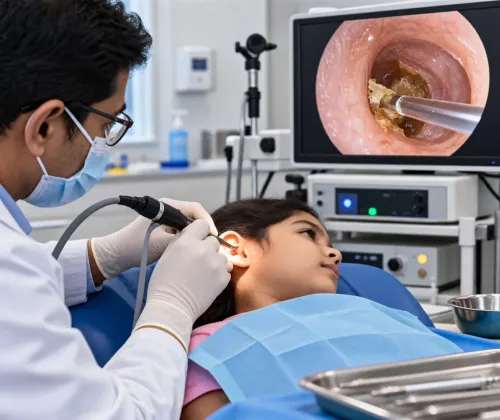
- Examine the nose with appropriate lighting and suction
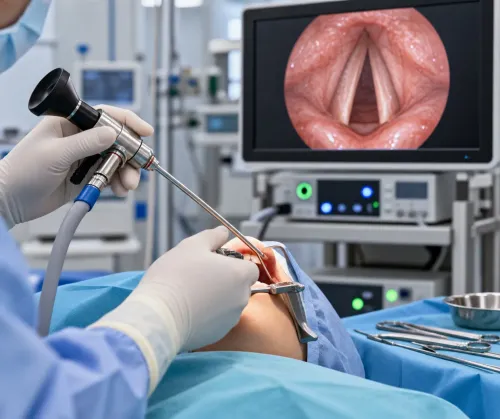
- Use nasal endoscopy when the source is not visible
- Review medicines and relevant health conditions
- Perform cautery when suitable
- Arrange nasal packing for heavier bleeding
- Recommend blood tests or imaging when indicated
- Provide clear aftercare instructions
Residents of Munnekollal should carry a list of medicines, especially anticoagulants, antiplatelet drugs, nasal sprays, and supplements.
Cautery Compared With Nasal Packing
Cautery seals a clearly identified bleeding point using a controlled chemical or electrical technique. It is usually considered when the vessel can be located and the surrounding conditions are suitable.
Nasal packing applies internal pressure and may be needed when bleeding is heavier or the precise source cannot initially be controlled. Posterior nosebleeds can require hospital-based management.
Neither method is selected solely according to patient preference; the bleeding site, severity, general health, and medication history guide the decision.
Preventing Another Episode
After bleeding stops, follow the clinician’s instructions about nasal moisturisation and activity. For the advised period, avoid forceful nose blowing, nose picking, very hot showers, heavy lifting, and strenuous exercise.
If a nasal spray has been prescribed, aim it slightly outwards towards the ear rather than directly at the central septum.
Dr. Sohini’s ENT Care - Empathy meets Expertise can assess recurrent bleeding and determine whether dryness, allergy, trauma, medication, or another condition is contributing.
A dependable provider should explain both the immediate control method and the longer-term prevention plan. Recurrent nosebleeds are often manageable, but repeated unexplained or one-sided bleeding should not be normalised without examination.
Keywords