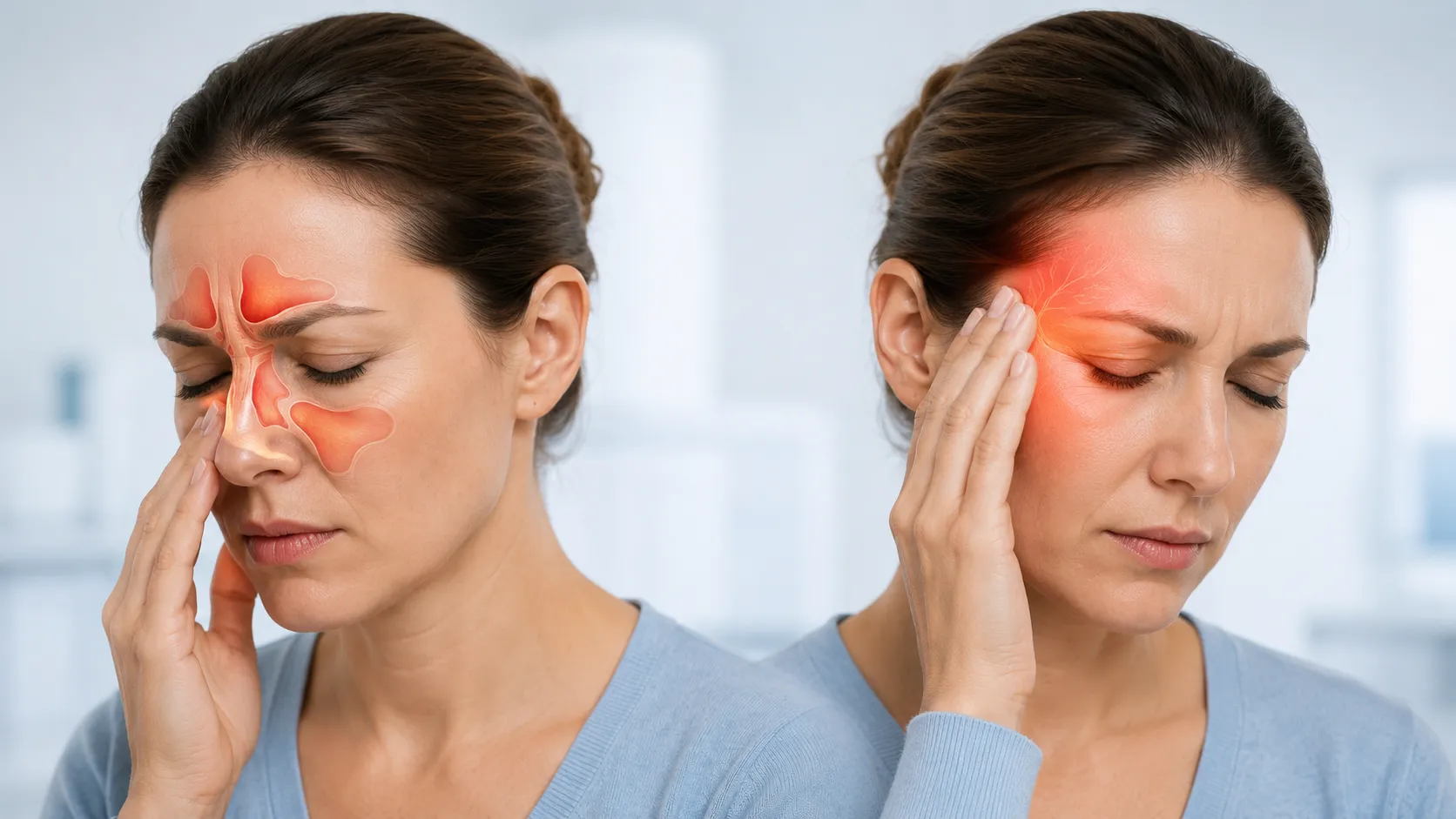
Facial pressure, pain around the eyes, a blocked sensation in the nose, and headache are frequently described as “sinus.” However, headache with facial pain does not always mean that the sinuses are infected.
Migraine can produce nasal congestion, watering of the eyes, and pressure-like facial discomfort. This overlap is one reason some people repeatedly take antibiotics or sinus medicines without lasting improvement.
Features That Can Point Towards Migraine
Migraine-related pain may be throbbing or pressure-like and can affect the forehead, cheeks, temples, or area around the eyes. It may be accompanied by:
- Nausea or vomiting
- Sensitivity to light
- Sensitivity to sound or smells
- Worsening with physical activity
- Visual disturbance
- Recurrent attacks separated by symptom-free periods
- A need to rest in a dark or quiet room
Some people experience congestion or watery eyes during an attack, making the headache feel sinus-related.
Features More Consistent With Sinus Inflammation
Acute sinusitis may follow a respiratory infection and cause nasal obstruction, thick discharge, reduced smell, and facial discomfort. Fever may occur, although it is not always present.
Chronic sinusitis is defined by a prolonged pattern of symptoms rather than headache alone. Typical complaints include persistent congestion, nasal discharge, reduced smell, and pressure lasting for an extended period.
Green or yellow mucus by itself does not prove that a bacterial infection is present. Similarly, facial tenderness alone cannot confirm sinus disease.
Why the Distinction Matters
Antibiotics do not treat migraine and are not appropriate for every episode of sinus inflammation. Conversely, migraine treatment will not remove a nasal polyp or correct another significant obstruction.
An evaluation for migraine-related sinus treatment in Bangalore may need to answer two separate questions:
- Is there objective evidence of nasal or sinus disease?
- Does the headache pattern fulfil features associated with migraine or another headache disorder?
Both conditions can coexist, so assessment should not force every patient into a single category.
How Clinicians Compare the Possibilities
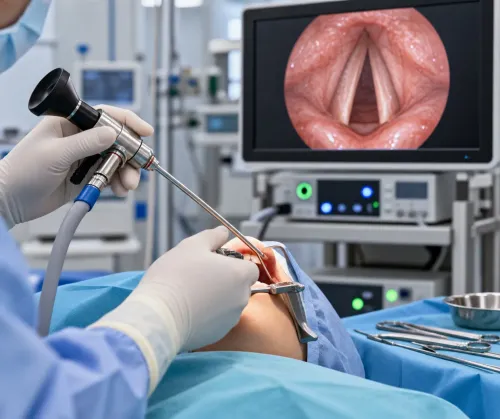
An ENT specialist may examine the nose and perform nasal endoscopy when appropriate. Imaging is considered when symptoms, examination findings, or treatment history justify it; it is not required for every headache.
Patients can help by keeping a brief symptom diary that records:
- Where the pain begins
- How long it lasts
- Nasal symptoms during the episode
- Light or sound sensitivity
- Nausea
- Menstrual or sleep-related patterns
- Food, stress, or weather triggers
- Medicines taken and their effect
This record is often more useful than relying on memory during a single appointment.
Common Treatment Mistakes
Repeatedly self-starting antibiotics is a frequent problem. Other mistakes include prolonged use of decongestant nasal sprays, ignoring migraine triggers, or assuming that a normal-looking nose means the pain is imaginary.
Working professionals in AECS Layout may experience headaches linked to irregular meals, screen exposure, disrupted sleep, stress, or dehydration. These factors can overlap with allergy and nasal symptoms, making a careful history particularly useful.
Dr. Sohini’s ENT Care - Empathy meets Expertise evaluates the nasal component and considers whether coordination with a physician or neurologist would be beneficial.
When Headache Requires Urgent Attention
Seek emergency care for:
- A sudden, extremely severe headache
- Headache after significant head injury
- Weakness, confusion, fainting, or seizure
- New visual loss
- High fever with neck stiffness
- Persistent vomiting
- Headache during pregnancy with concerning symptoms
- A new or changing headache in a person with cancer or reduced immunity
Accurate diagnosis prevents unnecessary treatment and creates a clearer path forward. The central question is not whether pain feels like it comes from the sinuses, but whether examination and symptom patterns show sinus inflammation, migraine, or both.
Keywords